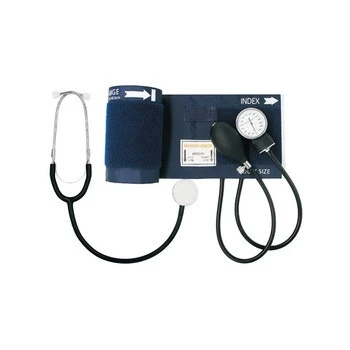
1. Quick Fixes for False Malfunctions (Operation/Power Supply Issues)
These are not hardware failures and can be resolved with simple adjustments:
Dead Battery/Poor Contact: Open the battery compartment and check. Replace with a new alkaline battery. If there is leakage or corrosion inside the compartment, gently sand the contacts with dry sandpaper and reinstall. If not used for a long time, it is recommended to remove the battery for storage.
Measurement Failure/Error Code: Re-tighten the cuff, adjusting it to 2-3cm above the elbow crease, with a tightness that allows one finger to be inserted. Sit still for 5 minutes and then measure again. After ruling out operational issues, remove the battery, let it sit for 1 minute, and restart the device. This usually resolves temporary errors.
Large Value Fluctuations: Keep away from strong electromagnetic fields such as mobile phones and microwave ovens. Change the measurement environment and remeasure. Maintain a 1-2 minute interval between consecutive measurements to allow the blood vessels to recover before measuring again.
2. Troubleshooting Common Minor Problems
Cuff Leak/Loose Connection: For minor cuff leaks, try sealing the damaged area with waterproof tape. For larger leaks, replace with a genuine cuff of the same model. For loose connecting tubes, simply tighten the connector.
Mercury Sphygmomanometer Segmentation: Place the sphygmomanometer upright and gently tap the outer wall of the glass tube. Most minor segmentation will resolve itself. If it still doesn't close, check for loose connections. Realign and secure, then let stand for 10 minutes and observe. If the problem persists, send it to a professional for refilling with mercury. Do not attempt to disassemble it yourself.
Button Malfunction (Electronic Blood Pressure Monitor): This is often caused by dust getting into the button gaps. Clean the dust with a dry brush and try again. If the button itself is worn or damaged, replace it with a button of the same specification. Non-professionals are advised against attempting disassembly.
Button Malfunction (Electronic Blood Pressure Monitor): This is often caused by dust getting into the button gaps. Clean the gaps with a dry brush and try again. If the button itself is worn or damaged, replace it with a button of the same specifications. Self-disassembly is not recommended.
3. Complex malfunctions should not be disassembled by the user; prioritize repair.
If the problem persists after the above troubleshooting, the following situations require professional assistance:
Air pump malfunction (slow inflation, no inflation), damaged pressure sensor, incomplete screen display: These are core hardware malfunctions. Self-disassembly may damage internal circuitry. It is recommended to contact the brand's after-sales service or a professional medical device repair shop for inspection.
Mercury leakage: Immediately open windows for ventilation. Cover the spilled mercury with sulfur powder, seal and discard. Do not contact directly. Send the entire device to a professional institution for repair. Do not continue to use the damaged mercury sphygmomanometer.
Excessive accuracy deviation: If the device has no obvious hardware damage, but the deviation from the hospital's reading exceeds 10 mmHg, send it to a local metrology verification institution for calibration. Disassembly and repair are not required.