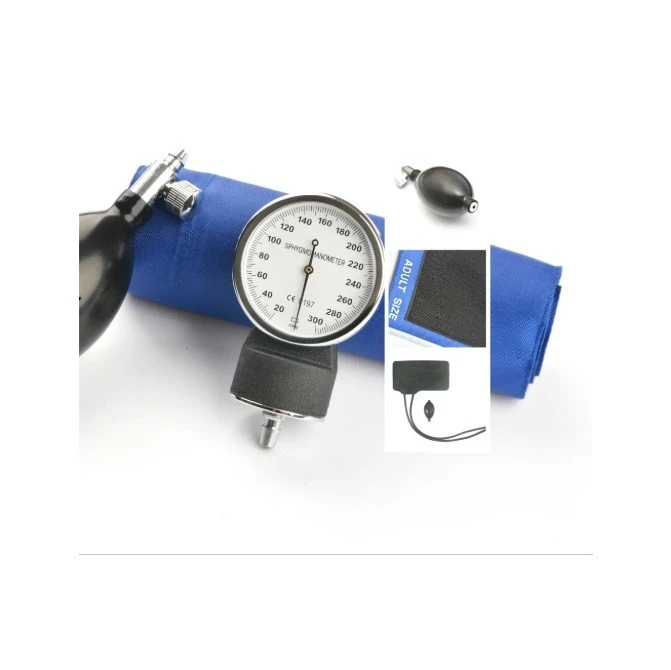
1. Comparison with a standard blood pressure monitor
This is the most commonly used self-calibration method, requiring a mercury sphygmomanometer or a pre-calibrated electronic blood pressure monitor as a reference.
Operating steps:
Preparation stage: Sit quietly for 5-10 minutes before measurement, empty your bladder, and maintain a quiet environment.
Alternating measurements:
Measure once with a mercury sphygmomanometer and record the result.
After resting for 2-3 minutes, measure once with the electronic blood pressure monitor and record the result.
Measure again with the mercury sphygmomanometer and record the result.
Result comparison: Take the average of the two mercury sphygmomanometer readings and compare it with the electronic blood pressure monitor reading. If the difference is ≤5mmHg, the device is accurate; if the difference is >10mmHg, you need to contact the manufacturer for calibration or replacement.
2. Simultaneous measurement method using a three-way connector
Some high-end models support simultaneous measurement by connecting both a mercury sphygmomanometer and an electronic blood pressure monitor using a three-way connector.
Operating steps:
Connect the three-way connector to the cuffs of both the mercury sphygmomanometer and the electronic blood pressure monitor.
Measure continuously 3 times under the same conditions, with an interval of 2-3 minutes each time.
Compare the two sets of data; calibration is complete if the error is ≤5mmHg.
3. Reset to factory settings
Some electronic blood pressure monitors support resetting calibration parameters by pressing a combination of buttons to restore factory settings.
Operating steps:
Press and hold the "Start/Stop" button or other designated combination of buttons (refer to the instruction manual for details).
After the screen displays the reset prompt, press the confirmation button to complete the operation.
4. Professional calibration
If the error is still large after self-calibration, it is recommended to send the device to the manufacturer or a professional testing agency for calibration.
Precautions:
Self-calibration should be performed in the same environment and under the same conditions to avoid interference.
It is recommended to calibrate the electronic blood pressure monitor once a year; calibration should be done earlier if it is used frequently or if the results are abnormal.
If the device is still inaccurate after calibration, it may be due to a hardware failure (such as a leaky cuff or aging sensor), and you need to contact after-sales service for repair.