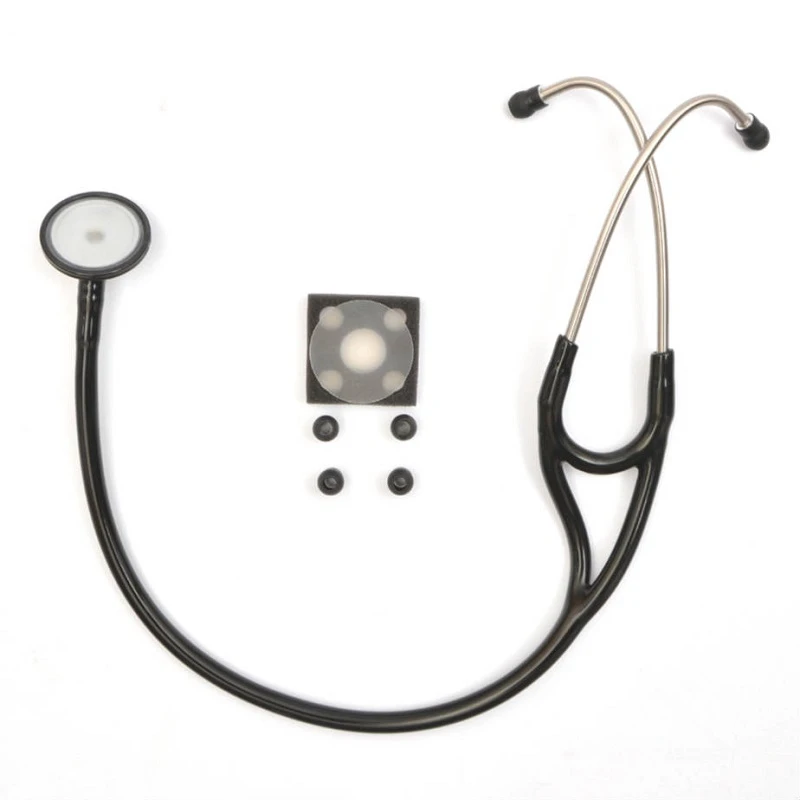
I. Frequency of Use and Patient Type
1. General Patient Use: Stethoscopes shared by multiple people should be wiped and disinfected before each use (e.g., with 75% alcohol). Studies show that the bacterial colonization rate of stethoscopes can reach 98% after 8 days of use, requiring regular cleaning and disinfection (recommended once a week).
2. Patients with Special Infections: Stethoscopes used by patients with multidrug-resistant bacteria or infectious diseases must be for individual use only and disinfected promptly.
II. Contamination Risk Assessment
1. Direct Contact with Contaminants: If contact with blood, bodily fluids, etc. 1. Contaminants must be cleaned immediately and disinfected with a medium/low-efficiency disinfectant.
2. Risk of Pathogen Colonization: The stethoscope membrane is one of the main routes of pathogen transmission (e.g., Staphylococcus aureus colonization rate exceeding 85%). Disinfection is recommended even without obvious contamination.
III. Environmental and Operational Requirements
1. High-Risk Environments: In high-risk infection areas such as ICUs and emergency rooms, the frequency of disinfection needs to be increased.
2. Operational Procedures: After examining each patient, disinfect the stethoscope simultaneously with hand hygiene (e.g., using a hand sanitizer containing 75% ethanol).