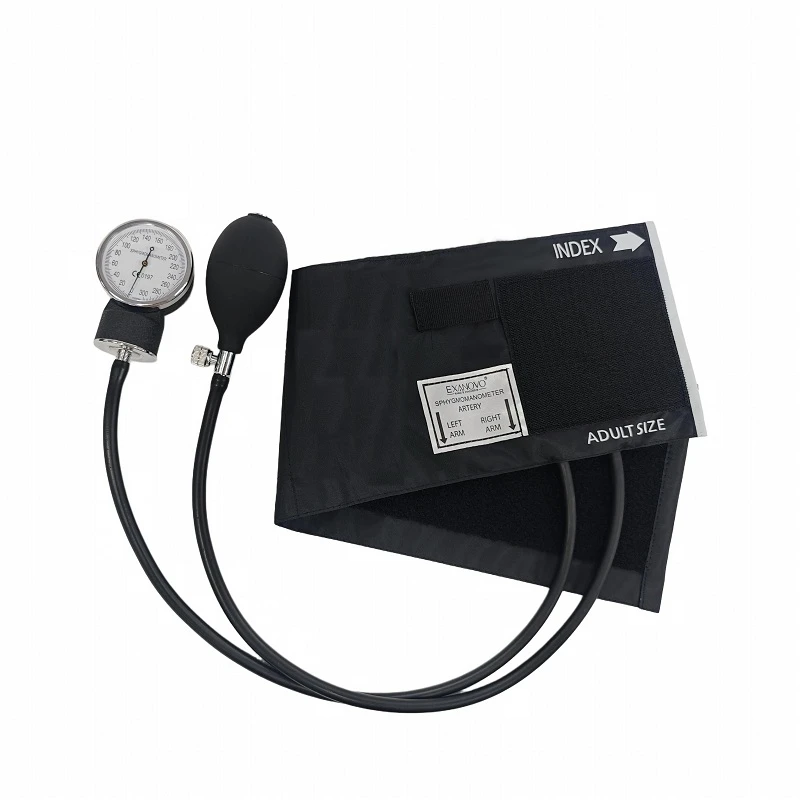

When it comes to monitoring blood pressure, accuracy is of utmost importance. As a supplier of blood pressure monitors (BPMs), I've witnessed firsthand the critical role these devices play in healthcare. In this blog, I'll delve into the factors that contribute to the accuracy of blood pressure monitors and recommend some of our top - performing products.


Understanding Blood Pressure Measurement
Blood pressure is measured in millimeters of mercury (mmHg) and is expressed as two numbers: systolic pressure (the top number) and diastolic pressure (the bottom number). Systolic pressure represents the force exerted on the artery walls when the heart contracts, while diastolic pressure is the force when the heart is at rest between beats.
Accurate blood pressure measurement is essential for diagnosing hypertension (high blood pressure), hypotension (low blood pressure), and other cardiovascular conditions. Inaccurate readings can lead to misdiagnosis, improper treatment, and potentially serious health consequences.
Factors Affecting the Accuracy of Blood Pressure Monitors
1. Measurement Technology
There are two main types of blood pressure measurement technologies: auscultatory and oscillometric.
- Auscultatory Method: This is the traditional method used by healthcare professionals. It involves using a stethoscope to listen for Korotkoff sounds while inflating and deflating a cuff around the arm. The accuracy of this method depends on the skill of the person taking the measurement.
- Oscillometric Method: Most modern blood pressure monitors use the oscillometric method. These devices measure the oscillations in the cuff pressure caused by the blood flow in the artery. They are more convenient and user - friendly, but their accuracy can be affected by factors such as cuff size, movement, and the quality of the sensor.
2. Cuff Size
The size of the cuff is crucial for accurate blood pressure measurement. A cuff that is too small will give falsely high readings, while a cuff that is too large will give falsely low readings. It's important to choose a cuff that fits the circumference of the upper arm properly. Our Large Screen BPM With Cuff comes with adjustable cuffs to ensure a proper fit for different arm sizes.
3. Calibration
Regular calibration is necessary to maintain the accuracy of blood pressure monitors. Over time, the sensors and components of the device can wear out or become less accurate. Some monitors have built - in calibration features, while others need to be calibrated by a professional. Our CE Approved Digital BP Monitor is designed to maintain high accuracy and can be easily calibrated to ensure reliable readings.
4. User Technique
The way a person uses a blood pressure monitor can also affect the accuracy of the readings. For example, the arm should be at heart level, the cuff should be wrapped snugly but not too tightly, and the person should be relaxed and still during the measurement. Our user manuals provide detailed instructions on how to use our monitors correctly to obtain accurate results.
Our Most Accurate Blood Pressure Monitors
1. LED Screen Digital Blood Pressure Monitor
This monitor features a large LED screen that displays clear and easy - to - read blood pressure readings. It uses advanced oscillometric technology to provide accurate measurements. The device also has a built - in memory function that can store multiple readings, allowing users to track their blood pressure over time.
2. Digital BPM
Our Digital BPM is a compact and portable device that offers high - accuracy blood pressure measurement. It is equipped with a sensitive sensor that can detect even the slightest changes in blood pressure. The monitor also has a one - touch operation, making it easy for anyone to use.
3. Household Digital BPM
Designed for home use, this monitor is reliable and accurate. It comes with a comfortable cuff and a simple interface. The device can perform multiple measurements in a row and calculate the average reading, providing a more accurate picture of the user's blood pressure.
Clinical Validation
To ensure the accuracy of our blood pressure monitors, we subject them to rigorous clinical validation. Our products are tested against the gold - standard auscultatory method in a controlled clinical environment. The results are compared to established international standards, such as the European Society of Hypertension (ESH) and the Association for the Advancement of Medical Instrumentation (AAMI). Only monitors that meet these strict standards are approved for sale.
Customer Feedback
We value our customers' feedback, and many of them have reported that our blood pressure monitors provide accurate and reliable readings. Customers appreciate the ease of use, the clear display, and the ability to track their blood pressure over time. Some customers have also mentioned that our monitors have helped them manage their hypertension more effectively.
Conclusion
In conclusion, choosing the most accurate blood pressure monitor depends on several factors, including the measurement technology, cuff size, calibration, and user technique. Our company offers a range of high - quality blood pressure monitors that are designed to provide accurate and reliable readings. Whether you need a monitor for home use or for professional healthcare settings, we have the right product for you.
If you're interested in purchasing our blood pressure monitors, we invite you to contact us for more information and to discuss your specific needs. Our team of experts is ready to assist you in finding the best solution for your blood pressure monitoring requirements.