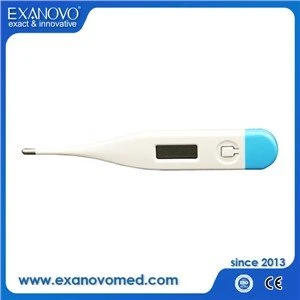

In the modern era of healthcare technology, smart digital thermometers have become an essential tool for monitoring body temperature accurately and efficiently. As a leading supplier of Smart Digital Thermometers, I am often asked about the memory capacity of these devices. This blog post aims to explore the concept of memory capacity in smart digital thermometers, its importance, and how it impacts users.
Understanding Memory Capacity in Smart Digital Thermometers
Memory capacity in a smart digital thermometer refers to the amount of data the device can store. This data typically includes temperature readings, the time and date of each reading, and sometimes additional information such as the user's ID or the measurement location. The memory capacity is usually measured in kilobytes (KB) or megabytes (MB), and it determines how many temperature readings the thermometer can store before it runs out of space.
The memory capacity of a smart digital thermometer is crucial for several reasons. Firstly, it allows users to track their temperature over time. By storing multiple readings, users can identify trends in their body temperature, which can be useful for monitoring the progress of an illness or the effectiveness of a treatment. For example, if a person has a fever, they can use the thermometer's memory to see if their temperature is rising, falling, or remaining stable.


Secondly, the memory capacity enables healthcare professionals to access historical temperature data. This can be particularly valuable in a clinical setting, where doctors and nurses need to review a patient's temperature history to make informed decisions about their care. For instance, if a patient has a recurring fever, the doctor can analyze the stored temperature readings to determine the pattern and duration of the fever, which can help in diagnosing the underlying cause.
Factors Affecting Memory Capacity
Several factors can influence the memory capacity of a smart digital thermometer. One of the primary factors is the type of memory used in the device. Most smart digital thermometers use non - volatile memory, such as flash memory, which retains data even when the device is turned off. Flash memory is preferred because it is reliable, energy - efficient, and has a relatively long lifespan.
The design and functionality of the thermometer also play a role in determining its memory capacity. Some thermometers are designed to store only basic temperature readings, while others can store additional data such as the user's age, gender, and the type of measurement (oral, axillary, etc.). The more data the thermometer stores, the larger the memory capacity required.
Another factor is the frequency of temperature measurements. If a user takes temperature readings frequently, the thermometer will fill up its memory more quickly. For example, if a person takes their temperature every hour, the thermometer will need a larger memory capacity compared to someone who takes their temperature only a few times a day.
Memory Capacity of Different Types of Smart Digital Thermometers
As a supplier, we offer a variety of smart digital thermometers, each with different memory capacities to meet the needs of different users.
- Rigid Tip Medical Digital Fever Thermometer: This type of thermometer is commonly used for accurate temperature measurement. It usually has a moderate memory capacity, capable of storing several dozen temperature readings. You can learn more about it Rigid Tip Medical Digital Fever Thermometer.
- Human Body Digital Thermometer: Designed for home use, this thermometer often has a user - friendly interface and a sufficient memory capacity to store a reasonable number of temperature readings. It allows users to track their family members' temperature over time. Check out our Human Body Digital Thermometer for more details.
- Clinical Flexible Digital Thermometer: Ideal for clinical settings, this thermometer typically has a larger memory capacity to accommodate the high volume of temperature measurements taken in a hospital or healthcare facility. It can store hundreds of temperature readings, making it suitable for long - term patient monitoring. Explore our Clinical Flexible Digital Thermometer for more information.
How to Manage Memory in Smart Digital Thermometers
To make the most of the memory capacity in a smart digital thermometer, users should follow some best practices. Firstly, they should regularly transfer the stored data to a computer or a mobile device. Many smart digital thermometers come with software or apps that allow users to sync their temperature data with their electronic devices. This not only frees up space in the thermometer's memory but also enables users to analyze the data more effectively.
Secondly, users should delete old or unnecessary temperature readings. If a user has stored a large number of temperature readings from a long - resolved illness, they can safely delete those readings to make room for new ones. However, it is important to ensure that any important data is backed up before deletion.
The Future of Memory Capacity in Smart Digital Thermometers
As technology continues to advance, we can expect to see further improvements in the memory capacity of smart digital thermometers. Future thermometers may be able to store even more data, including additional health - related information such as heart rate, blood pressure, and oxygen saturation levels. This will provide a more comprehensive view of a person's health and enable more accurate diagnosis and treatment.
In addition, the integration of cloud - based storage solutions may become more common. This would allow users to store an unlimited amount of temperature data on remote servers, eliminating the need to worry about running out of memory on the thermometer itself. Cloud - based storage also offers the advantage of easy access to data from multiple devices, making it more convenient for users and healthcare professionals.
Conclusion
The memory capacity of a smart digital thermometer is an important feature that can significantly enhance the user experience. It allows users to track their temperature over time, provides valuable data for healthcare professionals, and enables more informed decision - making. As a supplier of Smart Digital Thermometers, we are committed to providing high - quality devices with sufficient memory capacity to meet the diverse needs of our customers.
If you are interested in purchasing our smart digital thermometers or have any questions about their memory capacity, please feel free to contact us for a procurement discussion. We look forward to serving you and helping you find the perfect thermometer for your needs.