


Hey there, fellow medical enthusiasts! As a supplier of top - notch stethoscopes in the cardiology field, I've seen firsthand how age can play a huge role in what we hear through these trusty medical tools. So, let's dive right in and explore the effects of age on stethoscope findings in cardiology.
Younger Patients (Children and Adolescents)
When it comes to kids and teens, their hearts are like well - oiled machines in most cases. The heart of a young person is generally more elastic and has less wear and tear compared to older individuals.
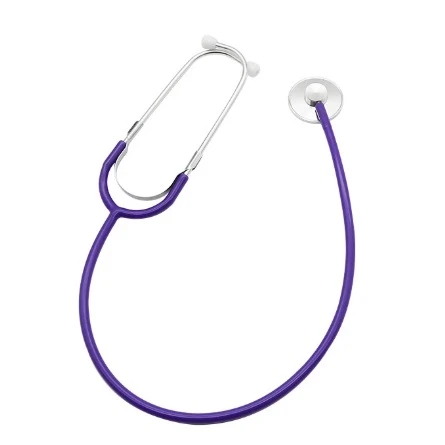
In children, the heart sounds are often clearer and more distinct. The first heart sound (S1), which is caused by the closure of the mitral and tricuspid valves, is sharp and crisp. The second heart sound (S2), due to the closure of the aortic and pulmonary valves, also has a well - defined split, especially during inspiration. This split can be easily heard with a good quality stethoscope, like our Lightweight Single Head Stethoscope. It's lightweight and perfect for pediatric use, allowing doctors to pick up these delicate sounds with ease.
One common finding in younger patients is innocent heart murmurs. These are usually due to the normal flow of blood through the heart and blood vessels, and they're often harmless. They're typically soft, short, and can change with body position or respiration. For example, a Still's murmur, which is one of the most common innocent murmurs in children, can be heard best at the lower left sternal border. With a stethoscope that has excellent acoustic properties, like the ones we supply, doctors can accurately distinguish these innocent murmurs from more serious ones.
Adults in Their Prime (20s - 50s)
As people enter adulthood, the heart starts to experience some changes, but generally, it's still in good shape. In this age group, lifestyle factors start to have an impact on heart health.
For those who lead a healthy lifestyle, with regular exercise and a balanced diet, the heart sounds remain relatively normal. However, for individuals with poor lifestyle habits such as smoking, excessive alcohol consumption, or a sedentary lifestyle, we might start to hear some early signs of trouble.
High blood pressure, which is becoming increasingly common in this age group, can cause the heart to work harder. This may result in an increased intensity of the second heart sound (S2), especially at the aortic area. A stethoscope with a sensitive diaphragm, like our Homecare Deluxe Stethoscope, can help detect these subtle changes.
In some cases, adults in this age range may also develop valvular heart diseases. Mitral valve prolapse is one such condition, where the mitral valve doesn't close properly. This can lead to a mid - systolic click, followed by a murmur. Detecting these sounds accurately requires a stethoscope that can pick up high - frequency sounds clearly.

Older Adults (60s and Above)
As we age, the heart undergoes significant changes. The heart muscle becomes stiffer, and the valves may thicken and calcify. These changes are reflected in the stethoscope findings.
The first heart sound (S1) may become less intense. This is because the closure of the mitral and tricuspid valves is not as sharp as it used to be due to the loss of elasticity in the valve structures. The second heart sound (S2) may also change. There can be a fixed or paradoxical split, which indicates problems with the timing of the closure of the aortic and pulmonary valves.
Another common finding in older adults is the presence of third and fourth heart sounds. The third heart sound (S3) is often associated with heart failure, especially when it persists. It's a low - frequency sound that occurs early in diastole. The fourth heart sound (S4), on the other hand, is due to the forceful contraction of the atria against a stiff ventricle. It can be a sign of left ventricular hypertrophy.
For detecting these low - frequency sounds in older patients, an oesophageal stethoscope can be very useful. Our Oesophageal Stethoscope is designed to pick up these hard - to - hear sounds that are often characteristic of cardiac conditions in the elderly.
Special Cases: Pediatrics and Geriatrics
When dealing with children, having a stethoscope that is kid - friendly can also be important. Our Kid Cosplay Stethoscope not only helps in accurate diagnosis but also makes the examination process less intimidating for young patients.
In geriatric care, the ability to detect subtle heart sounds is crucial. As the elderly may have multiple comorbidities, a high - quality stethoscope can make a big difference in early detection and treatment.
Pregnancy
Pregnancy is another unique situation where age can interact with stethoscope findings. In younger pregnant women, the heart is usually more resilient. However, as a woman gets older and becomes pregnant, the heart has to work even harder to support the growing fetus.
A Foetal Stethoscope is essential in monitoring the fetal heart rate. In older pregnant women, there may be a higher risk of pre - eclampsia and other cardiovascular complications. These can manifest as changes in the mother's heart sounds as well, such as abnormal murmurs or an increased intensity of heart sounds.
Conclusion
As you can see, age has a profound impact on stethoscope findings in cardiology. Whether you're a pediatrician, a cardiologist, or a general practitioner, having the right stethoscope for the job is crucial. At our stethoscope supply business, we understand the importance of accurate diagnosis, and that's why we offer a wide range of stethoscopes to suit different age groups and clinical situations.
If you're interested in purchasing high - quality stethoscopes for your medical practice or personal use, we're here to help. Contact us for procurement discussions, and let's find the perfect stethoscopes for you.


