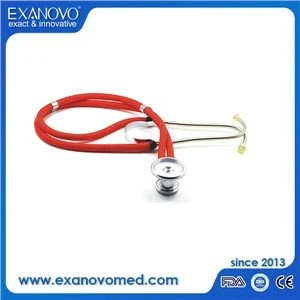

Single head stethoscopes have long been a staple in the medical field, valued for their simplicity and effectiveness. As a supplier of single head stethoscopes, I often encounter questions from medical professionals and students alike about the seal of these stethoscopes and their ability to prevent sound leakage. In this blog post, I will delve into the science behind the seal of single head stethoscopes and explore whether they truly offer a good seal to prevent sound leakage.
Understanding the Importance of a Good Seal
Before we discuss the seal of single head stethoscopes, it's important to understand why a good seal is crucial in stethoscope design. A stethoscope is essentially a listening device that amplifies internal body sounds, such as heartbeats, lung sounds, and bowel sounds. To accurately hear these sounds, the stethoscope must be able to isolate the target sound from external noise and prevent sound leakage. A poor seal can result in background noise interference, making it difficult to distinguish between different sounds and potentially leading to misdiagnosis.
How Single Head Stethoscopes Work
Single head stethoscopes are designed with a single diaphragm that is used to detect both high and low-frequency sounds. The diaphragm is a thin, flexible membrane that vibrates in response to sound waves. When the diaphragm is placed on the patient's skin, it picks up the sound waves and transmits them through the tubing to the earpieces. The design of single head stethoscopes is relatively simple compared to dual-head stethoscopes, which have two diaphragms - one for high-frequency sounds and one for low-frequency sounds.
Factors Affecting the Seal of Single Head Stethoscopes
Several factors can affect the seal of single head stethoscopes, including the design of the diaphragm, the quality of the materials used, and the proper placement of the stethoscope on the patient's body.
Diaphragm Design
The design of the diaphragm plays a crucial role in the seal of the stethoscope. A well-designed diaphragm should be able to conform to the contours of the patient's skin, creating a tight seal that prevents sound leakage. Some single head stethoscopes feature a flexible diaphragm that can adapt to different body shapes and sizes, while others have a rigid diaphragm that may require more pressure to create a good seal.
Material Quality
The quality of the materials used in the construction of the stethoscope can also affect the seal. High-quality materials, such as rubber or silicone, are more likely to provide a better seal than lower-quality materials. Additionally, the thickness and flexibility of the diaphragm can impact the seal. A thicker diaphragm may provide a better seal, but it may also reduce the sensitivity of the stethoscope.
Proper Placement
Proper placement of the stethoscope on the patient's body is essential for creating a good seal. The diaphragm should be placed firmly on the skin, with no gaps or air pockets. It's important to avoid placing the stethoscope over clothing or other materials, as this can interfere with the seal and reduce the quality of the sound.
Do Single Head Stethoscopes Have a Good Seal?
In general, single head stethoscopes can provide a good seal if they are designed and constructed properly. However, the effectiveness of the seal can vary depending on the factors mentioned above. Some single head stethoscopes are specifically designed to provide a tight seal, while others may require more effort to achieve a good seal.
One of the advantages of single head stethoscopes is their simplicity. With only one diaphragm, there are fewer components that can affect the seal. This can make it easier to achieve a good seal compared to dual-head stethoscopes, which have more complex designs.
However, single head stethoscopes may not be as effective at isolating high and low-frequency sounds as dual-head stethoscopes. This is because the single diaphragm is designed to detect both types of sounds, which can result in some sound leakage. Dual-head stethoscopes, on the other hand, have separate diaphragms for high and low-frequency sounds, which can provide a better seal and more accurate sound detection.
Comparing Single Head Stethoscopes to Other Types of Stethoscopes
To better understand the seal of single head stethoscopes, it's helpful to compare them to other types of stethoscopes, such as dual-head stethoscopes and electronic stethoscopes.
Dual-Head Stethoscopes
Dual-head stethoscopes are designed with two diaphragms - one for high-frequency sounds and one for low-frequency sounds. This allows for more accurate sound detection and can provide a better seal compared to single head stethoscopes. The dual-head design also allows for greater flexibility in adjusting the stethoscope to different body shapes and sizes. If you're interested in a dual-head stethoscope, you can check out our Cardiology Dual-head Stethoscope Kit or Custom Portable Dual-head Stethoscope.
Electronic Stethoscopes
Electronic stethoscopes use electronic sensors to amplify and filter sound. These stethoscopes can provide a more accurate and detailed sound detection compared to traditional stethoscopes. Electronic stethoscopes also have the advantage of being able to reduce background noise and enhance the clarity of the sound. However, they can be more expensive and may require additional training to use effectively. If you're interested in an electronic stethoscope, you can explore our Medical Cardiology Stethoscope.


Tips for Achieving a Good Seal with Single Head Stethoscopes
If you're using a single head stethoscope, there are several tips you can follow to achieve a good seal and prevent sound leakage:
- Choose the Right Size: Make sure the diaphragm of the stethoscope is the right size for the area you're listening to. A diaphragm that is too large or too small may not provide a good seal.
- Clean the Diaphragm: Regularly clean the diaphragm of the stethoscope to remove any dirt or debris that may affect the seal.
- Apply Pressure: Apply gentle pressure to the stethoscope to ensure a tight seal. However, be careful not to apply too much pressure, as this can distort the sound.
- Position the Stethoscope Correctly: Place the stethoscope on the patient's skin at the appropriate location and angle. Make sure the diaphragm is in direct contact with the skin and there are no gaps or air pockets.
- Use Earplugs: If you're in a noisy environment, consider using earplugs to reduce background noise and improve the clarity of the sound.
Conclusion
In conclusion, single head stethoscopes can provide a good seal if they are designed and constructed properly. The effectiveness of the seal can vary depending on several factors, including the design of the diaphragm, the quality of the materials used, and the proper placement of the stethoscope on the patient's body. While single head stethoscopes may not be as effective at isolating high and low-frequency sounds as dual-head stethoscopes, they offer a simple and cost-effective solution for many medical professionals.
If you're in the market for a single head stethoscope, we offer a wide range of high-quality stethoscopes that are designed to provide a good seal and accurate sound detection. We also have other types of stethoscopes available, such as Stethoscope For Nurses and Home Blood Pressure Monitor With Stethoscope. If you have any questions or would like to discuss your stethoscope needs, please feel free to contact us. We look forward to working with you and helping you find the perfect stethoscope for your practice.