


Can a fetal stethoscope be used by a midwife?
Hey there! As a supplier of Fetal Stethoscopes, I often get asked a bunch of questions about these nifty tools. One of the most common queries is whether a midwife can use a fetal stethoscope. Well, let's dive right into it and find out!
First off, what exactly is a fetal stethoscope? It's a specialized instrument designed to listen to the fetal heart sounds during pregnancy. It helps midwives and healthcare providers keep tabs on the baby's well - being. Unlike regular stethoscopes you might see in a doctor's office for general auscultation, fetal stethoscopes are tuned to pick up those tiny, yet crucial, heartbeats of the developing fetus.
Now, back to the question at hand. Can a midwife use a fetal stethoscope? Absolutely! Midwives are well - trained professionals who play a vital role in prenatal care, labor, and delivery. Fetal stethoscopes are right up their alley.

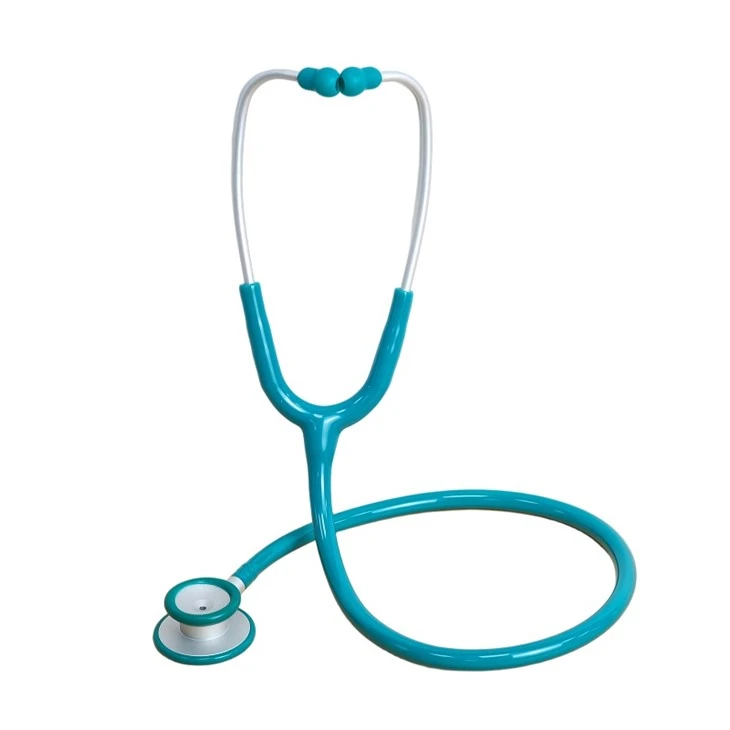
During prenatal check - ups, midwives use fetal stethoscopes to monitor the baby's heart rate. By listening to the rhythm and speed of the fetal heart, they can detect any potential issues early on. It's a non - invasive, simple, and effective way to assess the baby's health.
For instance, around the 18th - 20th week of pregnancy, a midwife might start using a fetal stethoscope to listen for the baby's heartbeat. At this stage, the baby's heart is strong enough to be heard through the mother's abdomen. The midwife will apply a little bit of gel to the mother's belly and place the stethoscope on it, carefully moving it around to find the best spot to pick up the heart sounds.
What makes a midwife the perfect person to use a fetal stethoscope? Well, midwives have an in - depth understanding of pregnancy and fetal development. They know exactly what a normal fetal heart rate should sound like at different stages of pregnancy. For example, in the first trimester, the fetal heart rate is usually a bit faster, around 110 - 170 beats per minute. As the pregnancy progresses, it might settle down to a range of 120 - 160 beats per minute. Midwives can quickly tell if the heart rate is too fast, too slow, or has an irregular rhythm, which could indicate an underlying problem.
Now, let's talk about the different types of fetal stethoscopes out there. There's the Sprague - Rappaport stethoscope. This is a popular choice among midwives and healthcare providers. It has a bell - shaped chest piece that's great for picking up low - frequency sounds, like the fetal heartbeat. The long tubing helps to isolate the sound from external noise, allowing for a clearer listening experience.
Another option is the Pediatrics Stethoscopes. While they're mainly designed for children, they can also be used to listen to fetal heart sounds. They often have a smaller chest piece, which can be more maneuverable on a pregnant woman's abdomen, especially in the early stages of pregnancy when the fetus is still small.
Then we have the classic Foetal Stethoscope. These are specifically made for listening to fetal heart sounds. They're lightweight and easy to handle, making them a go - to tool for midwives who are constantly on the move during prenatal visits and labor sessions.
The Stethoscope With Single Head is also a viable option. It's simple and straightforward, with a single chest piece that's optimized for listening to the fetal heart. The single - head design can make it easier to focus on the specific sound of the baby's heartbeat without any distractions from a dual - head setup.
And let's not forget the Medical Nurse Cardiology Estetoscopio Stethoscope. While it might be more commonly associated with cardiology, it can also be used by midwives to listen to fetal heart sounds. The dual - head design allows for different frequencies to be detected, which can be useful in some cases.
As a supplier, I've seen firsthand how these stethoscopes can make a big difference in a midwife's practice. They're not just tools; they're like little allies that help midwives provide the best possible care for their patients.
If you're a midwife or part of a healthcare team looking to upgrade your stethoscope collection, I'd love to have a chat with you. We have a wide range of high - quality fetal stethoscopes at competitive prices. Whether you're after a classic model or something more modern with advanced features, we've got you covered.
Contact me to discuss your specific needs and let's find the perfect stethoscope for you. With the right tools in hand, you can continue to provide excellent care to your pregnant patients and their little ones.


